Bower
Making recycling a fun and rewarding no-brainer
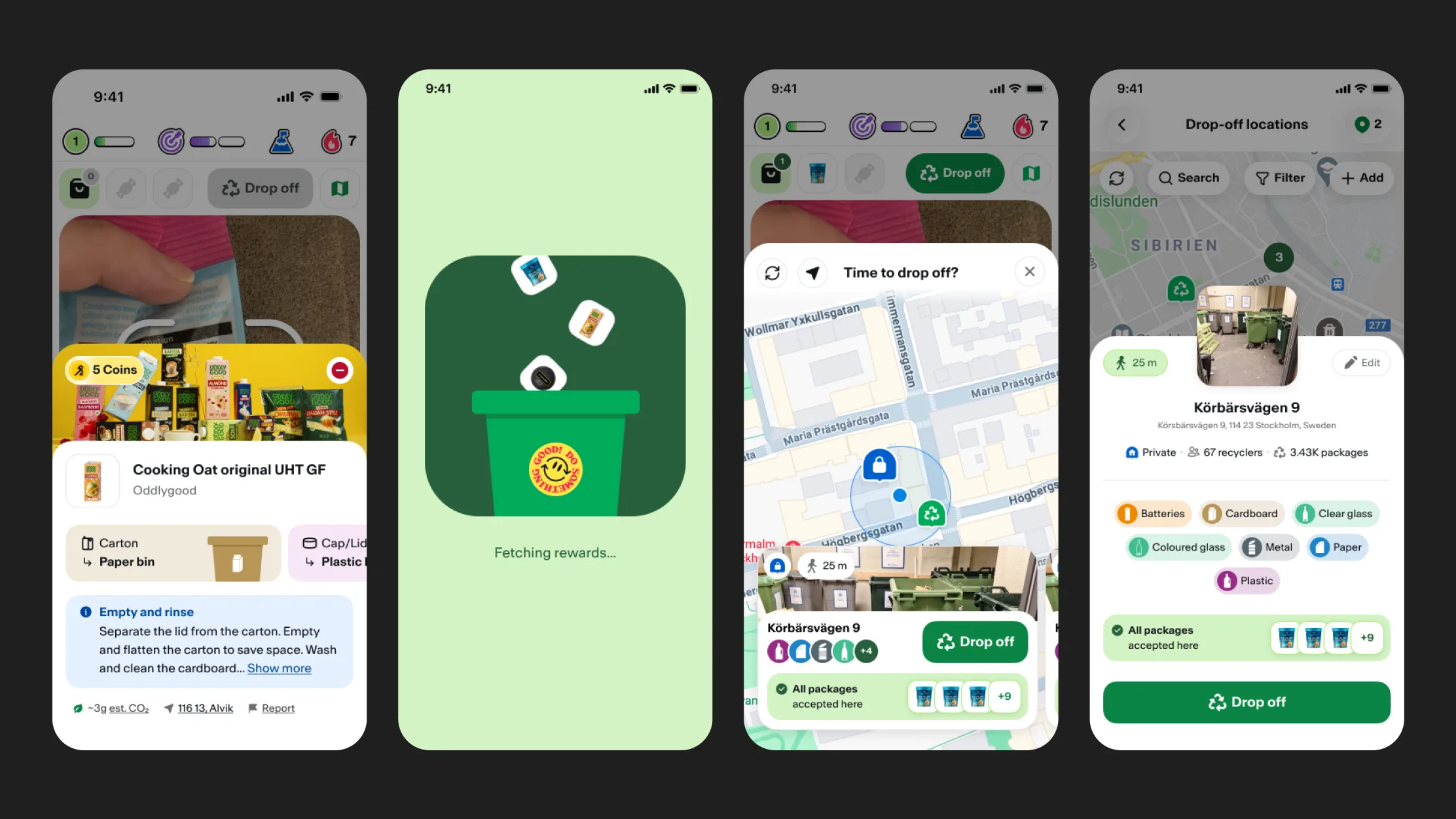
Bower is a recycling app: scan an item, get the right sorting instructions, and earn rewards from connected brands while tracking your estimated CO2 impact.
I joined Bower (prev. PantaPå) in 2019 as its first designer and employee. At the time it was a bootstrapped MVP available only in Sweden, with around 5K registered users and 1 connected customer.
During my time there I’ve led both product and design teams, and we’ve grown into a global community of 750K+ registered recyclers, 100K+ registered recycling locations and 400+ connected brands.
- Role
- Design Lead
- Client
- Bower
- Year
- 2019—Now
Teaching an old dog new tricks
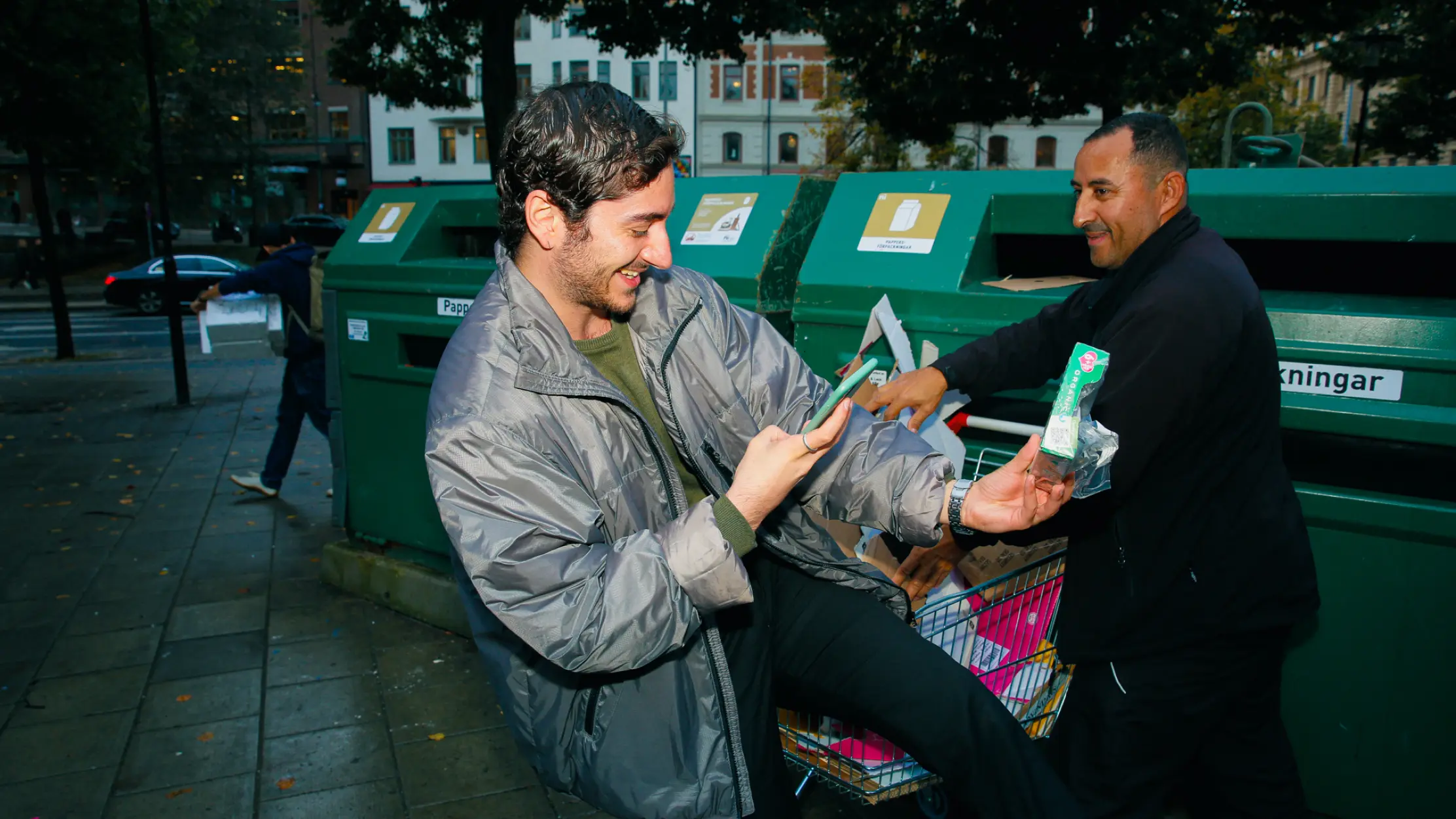
Recycling is already automatic for most people. In Sweden especially, it’s something we’re taught from childhood, a habit that runs without a second thought.
Bower asks people to interrupt that automaticity: scan their items, then check them in again at the point of disposal. That’s two extra steps layered onto a habit that used to need none. It also spans the physical and the digital. The gap between scanning and disposing can be minutes or weeks, and that breaks the tight feedback loop most habit-forming products rely on.
First answer, and where it fell short
Our first response was reward, specifically monetary, leaning on pant (deposit-return), a model already familiar to Swedish users. It worked narrowly. People recycled once, but a cash incentive that’s good at prompting a single action can’t make it repeat unprompted. And the reward itself was always going to be too modest to carry a habit on its own.
The shift
That meant the app needed to offer something beyond money, so I introduced two base personas with two different reasons for being there.
“Carl the coupon-chaser” was there for the money: cashback, coupons, tangible payout. “Eva the environmentalist” barely cared about that. Her driver was doing the right thing: a sense of accomplishment, watching her impact add up, donating her earnings to charity instead of keeping them.
Designing purely around monetary reward meant under-serving Eva, and over-relying on a reward we couldn’t make big enough to keep Carl coming back either.
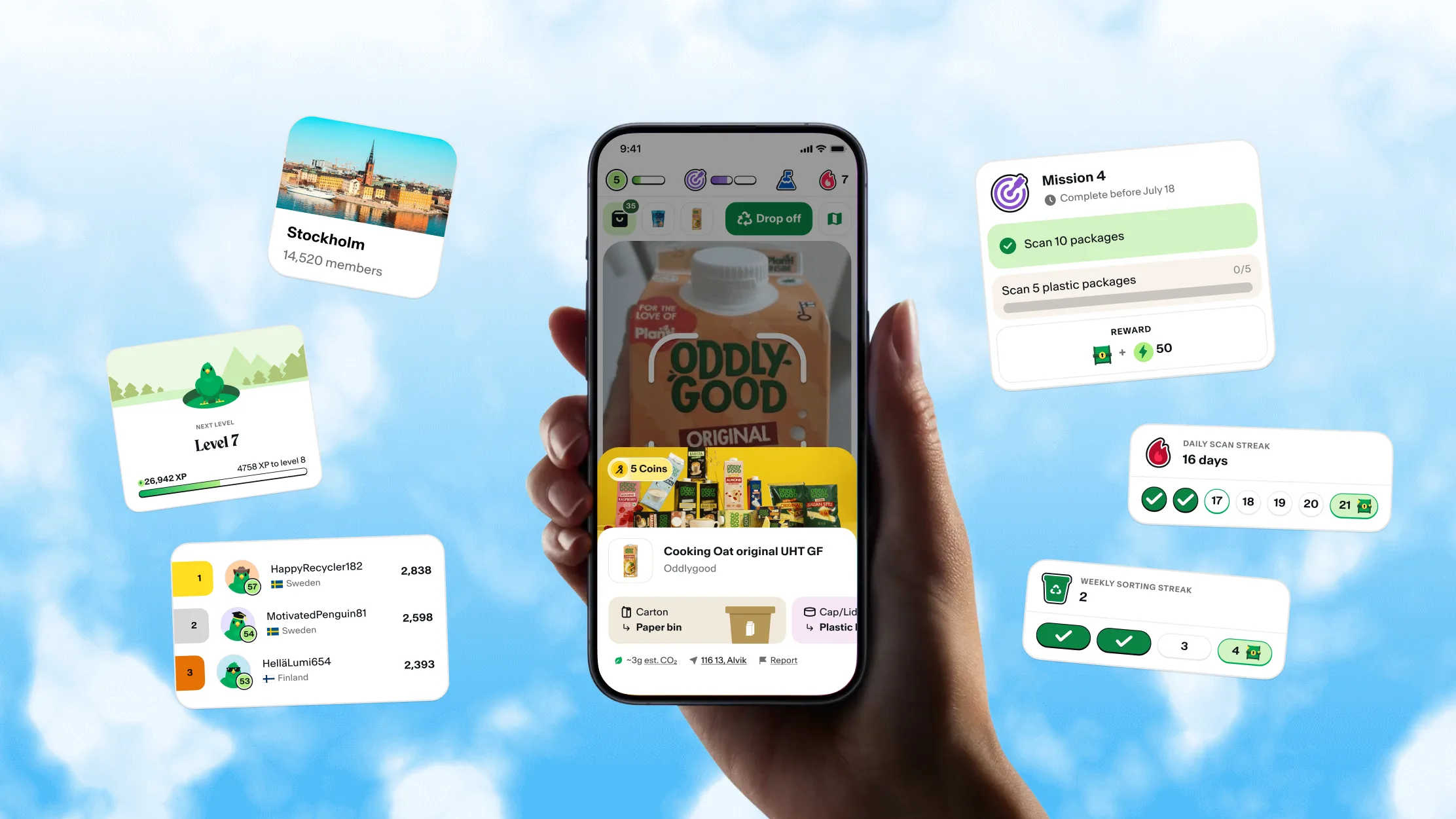
Gamification was the answer to both problems at once: give Carl something to chase that isn’t limited by budget, and give Eva a way to see and feel the impact she already cared about.
In practice that meant: an achievement track (streaks, competitive elements) for Carl, and a community and impact-tracking track (CO2 estimates, donations) for Eva. Same core loop, two different reasons to keep showing up.
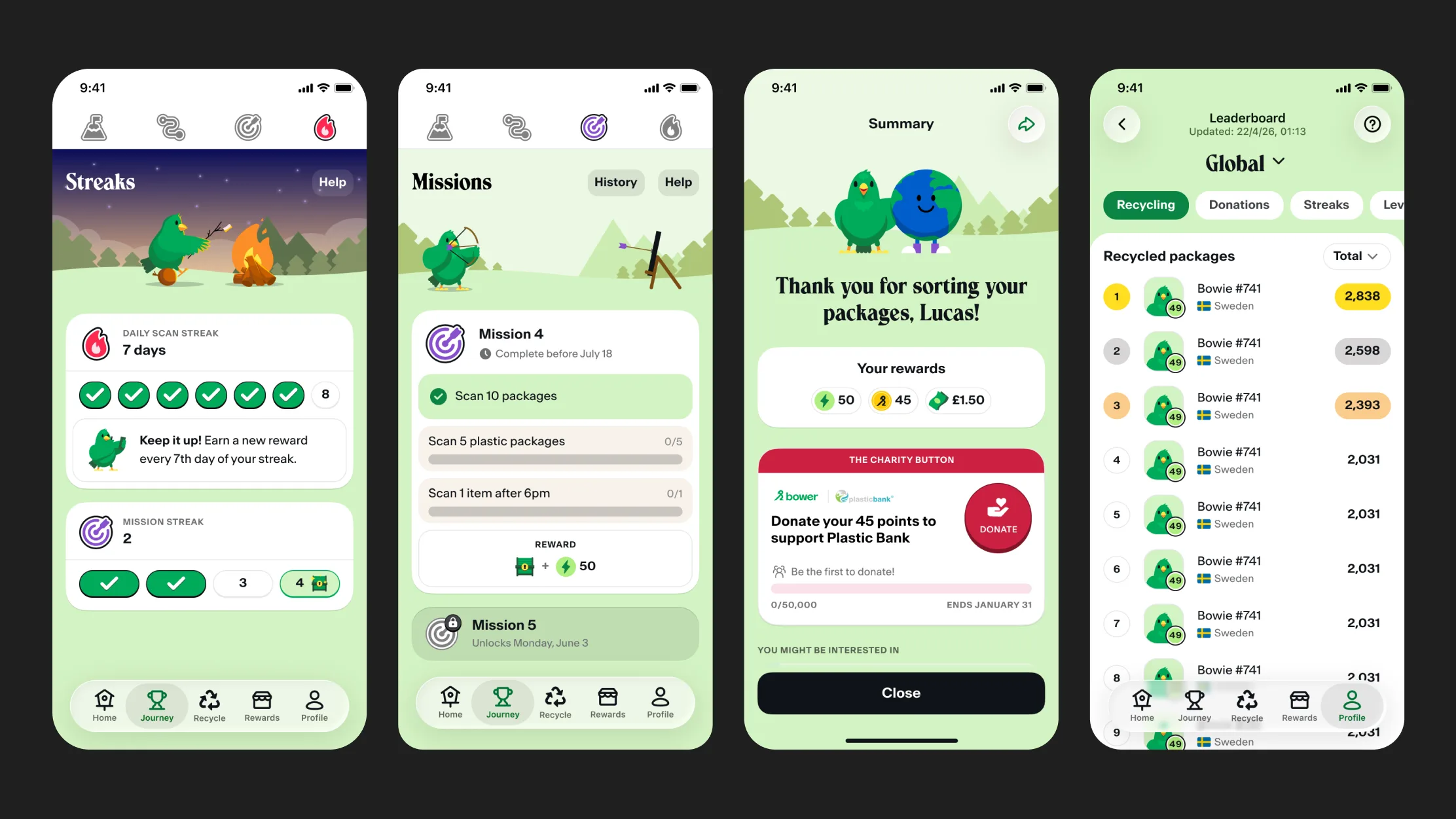
The outcome
- Daily active users, after streaks shipped
- Active-scanning share, after weekly missions
- Increased donations, after the charity button shipped